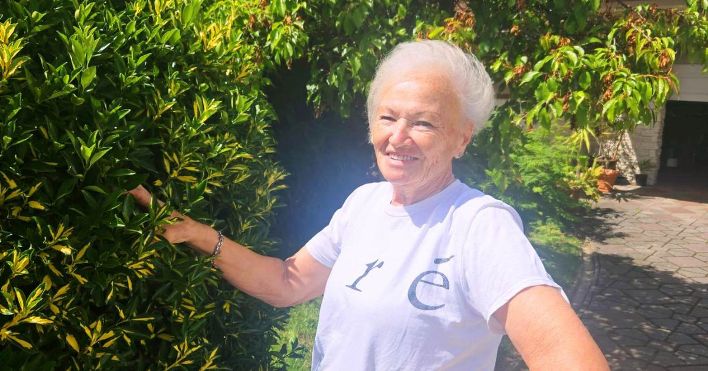
For years, Jasna believed her diabetes was well controlled. Her HbA1c was always good, and fingerstick tests rarely raised any concerns. Then she tried a continuous glucose monitor (CGM) for the first time—and discovered a shocking reality.
The sensor revealed that her glucose levels were swinging dramatically throughout the day and night without her even realizing it.
Her story shows just how misleading diabetes can be when you only look at averages instead of what is happening minute by minute.
When were you diagnosed with diabetes?
About 19 years ago. My husband passed away unexpectedly, and it was a huge emotional shock for me. For about a year I managed my diabetes with diet alone, but eventually that wasn't enough and I started taking oral medication.
Back then I was only checking my glucose with fingersticks. Since my HbA1c was always good, I assumed everything was under control.
The first time I wore a CGM, I was absolutely shocked. Looking at the graph, I realized my blood sugar had been making huge swings all day long.
How much did your glucose levels fluctuate?
Sometimes I'd get up during the night to go to the bathroom and I'd be so unsteady I could barely walk. I'd find myself holding onto the walls just to keep my balance. I never connected it with nighttime hypoglycemia.
I've also ended up in the emergency department several times because of my blood sugar.
On the other hand, I once measured a glucose level of 25 mmol/L (450 mg/dL). Who knows how many other times that happened without me realizing it?
Later I understood the math behind it. If my glucose sometimes climbed that high, then it had to be dropping too low at other times. But my doctors mostly looked at my HbA1c, which was always around 6%. The average looked great—but in reality my glucose was constantly swinging between highs and lows.
The CGM was the first thing that showed me what was really happening throughout the day.
Many people with type 2 diabetes tend to have glucose levels that stay consistently elevated. Mine doesn't—it goes up and down all day long like a roller coaster.
The sensor literally opened my eyes.
Did wearing a CGM change your treatment or daily habits?
Absolutely.
I actually reduced my evening diabetes medication by half after seeing how often my glucose dropped overnight. I realized I'd been suffering from unnecessary nighttime hypoglycemia for years.
During the day, fingerstick testing only gave me snapshots. Between those tests, I had no idea what was happening.
My glucose could look perfectly fine first thing in the morning, but then fluctuate wildly throughout the day without me knowing.
Now I simply glance at my sensor and immediately know where I stand. It gives me a sense of security I never had before.
Have the nighttime lows improved?
Yes, they're much less frequent now.
I understand how my body responds much better, so I can prevent many of those situations before they happen.
The biggest relief is that I no longer feel like my blood sugar can catch me completely by surprise. Nighttime hypoglycemia is not only unpleasant—it can also be dangerous.
What surprised you most after you started using a CGM?
The biggest surprise was seeing how much my glucose rises first thing in the morning—even before I eat anything.
When I used fingerstick tests, I'd check my glucose as soon as I woke up, and everything looked normal. I assumed it stayed stable until breakfast.
But the CGM showed me that the moment I got out of bed and started moving around, my glucose immediately climbed.
That's when I realized fingerstick testing had only been showing me isolated moments, not the whole picture.
What did the CGM teach you about food?
It completely changed the way I think about eating.
I discovered that some foods raise my glucose much more than I ever expected.
For years I avoided fat because I thought that was the healthiest approach. Nobody explained that healthy fats can actually help keep glucose levels more stable.
Now I use olive oil or eat slightly fattier cuts of meat, and I can clearly see that my glucose doesn't spike as quickly.
When you can actually see your glucose curve after a meal, you finally understand how different foods affect your own body—not just what you've read in a book.
Many older people are afraid of diabetes technology. What would you tell them?
I completely understand because I felt exactly the same.
I thought it would be far too complicated and that it wasn't meant for someone like me.
But why shouldn't it be? I deserve fewer fingersticks too.
You learn. It just takes a little more time and patience than it might for someone younger.
Were you nervous about wearing a CGM yourself?
A little.
I wondered how I'd wear it, how to apply it, and whether I'd ever learn to use the technology.
In my mind it seemed much more complicated than it actually turned out to be.
Now that I've experienced it, I'm genuinely impressed. I only wish I'd started using one years earlier.
Honestly, I'd rather give up something else than give up my sensor.
What would you say to someone considering buying a CGM?
If you can possibly afford it, even using three sensors a year is worth it.
For me, it completely changed the way I understand my diabetes.
It showed me things I never could have seen with fingerstick testing alone.
Only when you can see what your glucose is really doing throughout the day can you make meaningful changes.
Today I understand my diabetes far better than I ever did before using a CGM.