During a presentation at ATTD 2026 (Advanced Technologies & Treatments for Diabetes), an international congress focused on diabetes therapies and technologies held this year in Barcelona, experts highlighted that women with type 1 diabetes carry an additional burden that men with the same condition generally do not experience. Hormonal fluctuations, menstruation, perimenopause, menopause, greater psychological strain, societal expectations, and often reduced practical support all contribute to making diabetes management more complex for women.
What Experts Presented at ATTD 2026
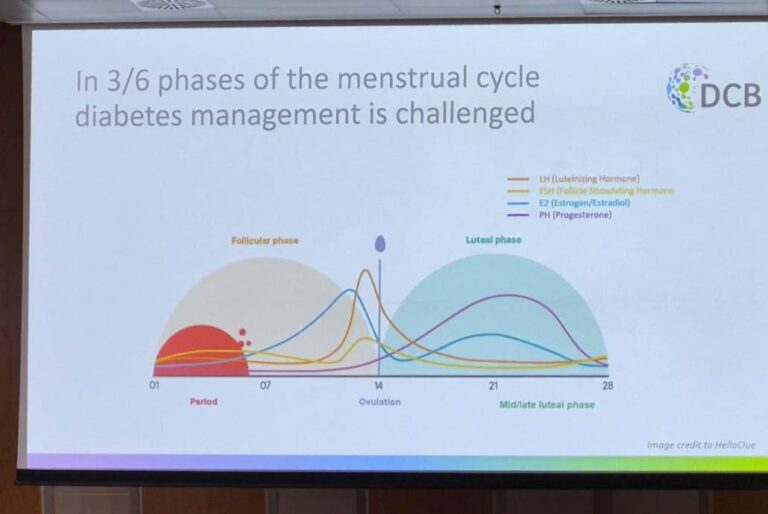
Researchers showed that diabetes management becomes more difficult during three of the six phases of the menstrual cycle. Insulin requirements do not remain stable throughout the month. The most common pattern is increased insulin sensitivity during the follicular phase, while other phases may bring increased insulin resistance and greater difficulty maintaining glucose levels within the target range.
Throughout the cycle, levels of estrogen and progesterone fluctuate significantly. Estrogen tends to increase insulin sensitivity, while progesterone can increase insulin resistance. As a result, insulin needs change accordingly. In practice, this often leads to more hyperglycemia, greater glucose variability, or situations where women need to manually override diabetes technology to maintain optimal glucose control.
Another important issue is that current Automated Insulin Delivery (AID) systems often cannot adapt quickly enough to rapid hormonal changes. Experts described this as a "learning lag" — a delay in the algorithm's ability to recognize and respond to changing insulin requirements. Consequently, many women must manually correct what the system has not yet learned to anticipate.
To compensate, women frequently adjust settings, modify insulin action times, temporarily switch to manual mode, or develop their own management strategies. One analysis presented at the conference identified as many as 68 different coping strategies, which researchers grouped into 20 categories of interventions.
These findings highlight that women often need a particularly deep understanding of diabetes technology in order to compensate for limitations that current systems cannot yet address automatically.
Future generations of AID systems are expected to incorporate a much broader range of data, including physical activity, hormonal status, menstrual cycle information, sleep quality, stress levels, and other physiological factors. Only then may the outcome gap between women and men begin to narrow significantly.
If you're interested in this topic, be sure to read our article: "The Bermuda Triangle: Women, Diabetes, and Hormones."
Perimenopause and Menopause Add Another Layer of Complexity
The presentation also emphasized that women with type 1 diabetes may enter menopause slightly earlier than the general population. Menopause is officially defined as 12 consecutive months without menstruation and typically occurs between the ages of 48 and 52. However, many challenges begin earlier during perimenopause.
During this transition period, menstrual cycles become irregular and estrogen and progesterone levels fluctuate unpredictably. As a result, glucose levels may become even harder to manage.
In a UK survey, approximately 73% of women with type 1 diabetes reported that menopause affected their diabetes management. In a Dutch survey, 67.4% of menopausal women reported moderate to severe changes in glucose control. Some experienced more hypoglycemia, others more hyperglycemia, while many reported significantly greater glycemic variability.
Longer Life Expectancy Brings New Challenges
Another key message was that advances in type 1 diabetes treatment have dramatically improved life expectancy. Individuals diagnosed during childhood are now living much longer, and type 1 diabetes is increasingly being diagnosed in adults as well as children.
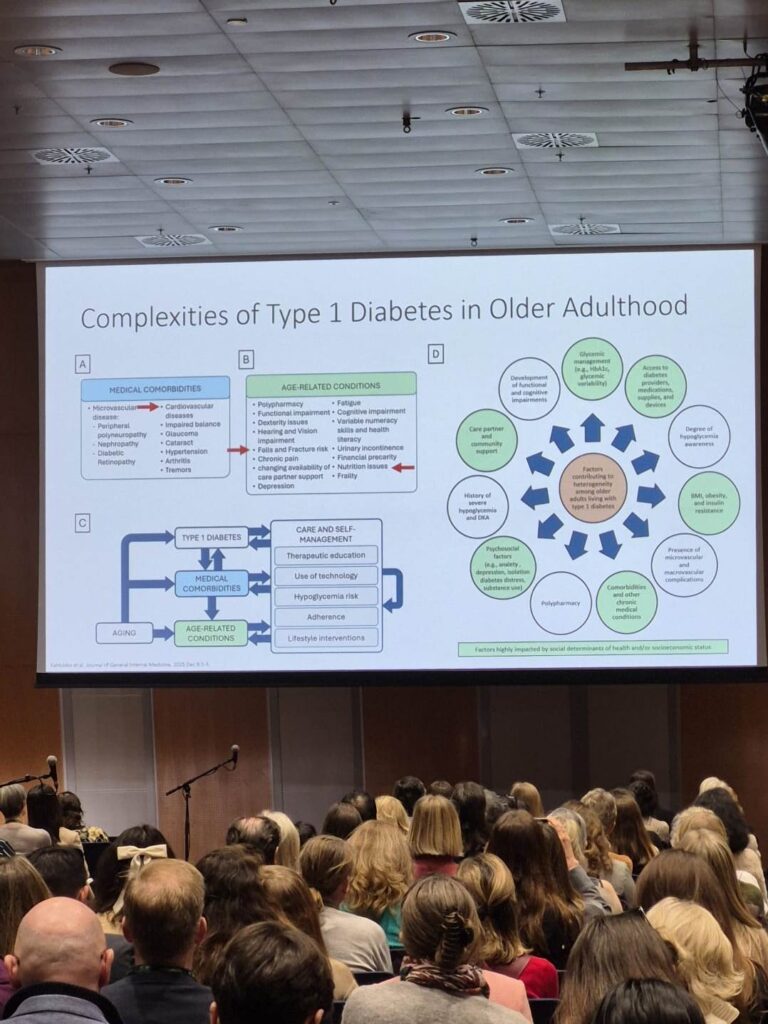
As a result, a growing number of people with type 1 diabetes are reaching older age and facing age-related challenges such as additional health conditions, reduced mobility, vision impairment, cognitive decline, financial limitations, and changing social support networks. One study presented at the conference reported that 16% of people living with type 1 diabetes were over the age of 65.
Managing type 1 diabetes in older age therefore depends on much more than insulin and glucose levels. Factors such as living arrangements, available support, visual function, technological literacy, and access to diabetes technology become increasingly important. Women are often at a disadvantage in several of these areas.

Beyond Biology: The Emotional and Social Burden
The presentation also addressed an often overlooked issue: women with diabetes are more likely to experience diabetes distress. This refers to the psychological burden associated with constant decision-making, ongoing concerns about glucose levels, fear of complications, and the feeling that diabetes management never truly stops. Interestingly, experts noted that diabetes distress often decreases with age.
Women are also more likely to experience additional challenges such as eating disorders and societal pressures related to body image. These factors can complicate relationships with food, insulin use in public, self-image, and diabetes self-management.
One qualitative study presented at the conference found that women with type 1 diabetes often receive less practical support from their spouses than men with diabetes. This means that many women carry a larger share of the daily management burden on their own.

The Impact of Sex and Gender on Diabetes Management
Women with type 1 diabetes do not experience the condition in the same way as men with the same diagnosis. Hormonal fluctuations, the menstrual cycle, menopause, psychological pressures, societal expectations, and reduced practical support create an additional layer of complexity that current diabetes technologies can only partially address.
As diabetes technology continues to evolve, these differences are likely to receive greater attention. Until then, it is essential to acknowledge and discuss these challenges openly. Only by recognizing these unique barriers can healthcare providers, researchers, technology developers, and support networks offer truly effective solutions for women living with type 1 diabetes.
Discover more about this important topic in our article: "Challenges of Type 1 Diabetes in Women".