
Ketone bodies in people with type 1 diabetes often cause concern because they are associated with diabetic ketoacidosis — a severe and potentially life-threatening condition. However, what is less well known, and far more important, is that ketones themselves are a natural energy substrate produced when the body uses fatty acids as fuel.
Understanding the difference between physiological ketosis and diabetic ketoacidosis (DKA) is essential for correctly interpreting laboratory results and maintaining metabolic balance.
Ketone metabolism: energy from fat
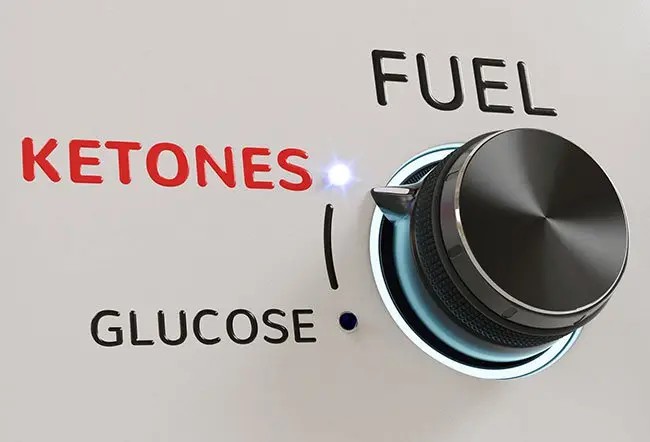
When glucose availability is low — during fasting, physical activity, or a low-carbohydrate diet — the body activates fatty acid metabolism in the liver, producing ketone bodies. These water-soluble molecules serve as an efficient source of energy for the brain, muscles, and heart.
In people without diabetes, insulin automatically limits excessive ketone production. In people with type 1 diabetes, this function must be replaced through appropriate dosing of exogenous insulin.
If this topic interests you, we also invite you to read our article: “Check-ups with Your Diabetologist – Why They Matter Specifically to YOU.”
The role of exogenous insulin and basal dose adjustment
People with type 1 diabetes depend on insulin administered from outside the body, either by pump or by injection.
This exogenous insulin has two key functions:
- it enables cells to take up glucose,
- it prevents uncontrolled lipolysis and excessive ketogenesis.
When carbohydrate intake is reduced, for example when switching to a low-carb or ketogenic diet, insulin requirements naturally decrease. In that situation, the basal insulin dose must be adjusted to maintain balance: enough insulin to prevent unwanted acidosis, but not so much that it causes hypoglycemia.
This type of diet may offer several benefits:
- fewer glucose fluctuations,
- reduced need for correction boluses,
- more stable glucose levels throughout the day,
- lower risk of hypoglycemia.
In this state, ketone levels between 0.5 and 3 mmol/L reflect physiological ketosis — a healthy and balanced metabolic state.
Physiological ketosis: a healthy and natural mechanism
Physiological ketosis is a natural response of the body to reduced glucose availability. In this state, the body uses ketones as a major energy source, while insulin — although present in smaller amounts — continues to regulate ketogenesis. Blood acidity remains normal, with pH values between 7.35 and 7.45, meaning that harmful acidosis is not present.
Numerous studies show that physiological ketosis can:
- improve metabolic flexibility,
- stabilize blood glucose levels,
- reduce insulin requirements,
- and may have neuroprotective and anti-inflammatory effects.
Some studies, such as Gough et al. (2021), suggest that physiological, controlled ketosis has significant neuroprotective, anti-inflammatory and metabolic benefits. On the other hand, the study by Turton et al. (2023) reports very promising findings in people with type 1 diabetes as well — including improved time in range (TIR), fewer glucose fluctuations, and reduced frequency of hypoglycemia in some trials.
However, it is important to emphasize that the available research has so far involved limited numbers of participants and relatively short follow-up periods. Caution is therefore necessary, especially with careful adjustment of basal insulin doses and regular monitoring of hydration and electrolytes.
Diabetic ketoacidosis: lack of insulin, not ketones themselves
Dangerous ketoacidosis is not caused by ketones alone, but by insufficient insulin. Without insulin, glucose cannot enter the cells, the body shifts into extreme fat breakdown, and the liver produces excessive amounts of ketones that the body can no longer buffer.
It is important to stress that DKA is not diagnosed based on blood ketone levels alone. Diagnosis depends on the patient’s overall clinical condition, including:
- elevated blood glucose, usually above 13 mmol/L,
- elevated ketones, often above 3 mmol/L,
- metabolic acidosis, with pH below 7.3 and bicarbonate below 18 mmol/L,
- clinical symptoms such as nausea, vomiting, dehydration, rapid deep breathing known as Kussmaul breathing, drowsiness, or confusion.
In other words, elevated ketones without clinical signs of acidosis, with normal pH and normal blood glucose, do not mean ketoacidosis. In that context, they are simply a biochemical marker of increased fat utilization, most often entirely physiological.
Continuous ketone monitoring and remote follow-up: context is essential
With the development of sensors that enable continuous ketone monitoring, more parents of children with type 1 diabetes can remotely track ketone and glucose levels in real time. This is a technological advancement that can improve safety, but if interpreted incorrectly, it may also lead to unnecessary concern.
Parents may sometimes react with alarm when they see a rise in blood ketones, even though the child has normal blood glucose, is not dehydrated, and feels well.
In such circumstances, elevated ketones alone are not a sign of illness. They are a natural result of reduced glucose availability, increased physical activity, or lower carbohydrate intake.
For diabetic ketoacidosis to develop, the following must usually be present at the same time:
- high ketones,
- high blood glucose,
- signs of dehydration and metabolic acidosis.
Without this combination, elevated ketone values alone — except for extreme levels above approximately 5–6 mmol/L — are not a reason for emergency intervention, but for monitoring and a rational assessment of the overall situation.
Conclusion
Ketones are a biological marker of metabolic flexibility, not an enemy. In people with type 1 diabetes, with careful titration of exogenous insulin and controlled carbohydrate intake, physiological ketosis can be a safe and useful state that contributes to better diabetes management, more stable glucose levels, and lower overall insulin requirements.
Diabetic ketoacidosis, by contrast, is a clinical syndrome recognized by the combination of high ketones, high glucose, and clinical signs of acidosis — not by ketone values alone.
Therefore, when using new sensors and remotely monitoring children with type 1 diabetes, it is necessary to look at the whole picture, not numbers taken out of context. In that framework, ketones show that the body is effectively using its own energy reserves — they are not, by themselves, a reason for fear.
Author: Anton Glasnović