New to insulin? Learn more about insulin dosing and timing, and how often to test your blood sugar if you have type 2 diabetes.
If you have type 2 diabetes, your treatment regimen will likely change over time, and at some point your doctor may suggest that you start taking insulin. Although this may feel intimidating, millions of other people living with type 2 diabetes also take insulin, which is clear proof that it is manageable.
- Why do some people with type 2 diabetes need to take insulin?
- When do people with type 2 diabetes start taking insulin?
- What types of insulin are there?
- How should I take and adjust my insulin doses?
- How often should I test my blood sugar?
- What else should I know about taking insulin?

Why do some people with type 2 diabetes need to take insulin?
Type 2 diabetes can progress over time, which means it becomes harder for the body to regulate glucose levels. Many body cells become less sensitive to insulin (this is called increased insulin resistance), and specific cells in the pancreas that produce insulin make less of it (this is called beta-cell insufficiency). This is not necessarily related to how well a person manages their diabetes, and it is probably not something that can be prevented.
You can also read our article: Everyone with Type 2 Diabetes Has Insulin Resistance and How to Naturally Reduce Insulin Resistance – 6 Practical Tricks.
For many people, adjusting lifestyle factors such as following a reduced-calorie diet and increasing physical activity is key to keeping blood glucose stable and within the target range. Healthcare professionals may also recommend that people with type 2 diabetes take additional medications such as metformin, DPP-4 inhibitors, SGLT-2 inhibitors, or GLP-1 agonists to improve glucose management, reduce HbA1c, lose weight, or support heart and kidney health.

When do people with type 2 diabetes start taking insulin?
After 10 to 20 years, many people with type 2 diabetes will begin insulin therapy, although each person’s journey with type 2 diabetes is different. This happens when lifestyle changes and medications no longer keep your glucose levels within your target range. It is important to start treatment as early as possible to avoid persistent hyperglycemia (high blood sugar), which can lead to long-term health complications affecting your heart, kidneys, eyes, and other organs.
What types of insulin are there?
The key to transitioning to insulin is understanding your options. Some people who take insulin need both basal (long-acting) and prandial (rapid-acting or mealtime) insulin every day, while others may use only basal insulin. Learn more about your options here.
Basal (long-acting) insulins are designed to be injected once or twice a day to provide a steady background level of insulin throughout the day. Basal insulins help keep blood sugar at a consistent level when you are not eating and overnight, but they cannot cover carbohydrates eaten in meals or snacks, or spikes in glucose after eating.
Some people use other medications, such as GLP-1 agonists, to cover mealtimes. Combined GLP-1/basal treatments for people with type 2 diabetes combine basal insulin with a GLP-1 agonist medication in a single daily injection. This combination can effectively lower glucose levels while also reducing weight gain and the risk of hypoglycemia (low blood sugar). Learn more here.
Prandial (rapid-acting or “mealtime”) insulins are taken before meals and work quickly to cover the carbohydrates eaten and lower high blood sugar after meals. Ultra-rapid-acting prandial insulins may work even faster in the body to lower glucose levels. Rapid and ultra-rapid insulins are also taken to correct high glucose levels when they occur or remain elevated several hours after a meal.
Basal and prandial insulins are insulin analogs, which means they differ slightly in structure from the insulin naturally produced in the body. Insulin analogs have certain characteristics that may be helpful for people with diabetes. Human insulins, on the other hand, were developed first and are identical to those produced by the human body. Human insulins are classified as regular (short-acting insulin) or NPH (intermediate-acting). They are generally less expensive than insulin analogs and can be purchased without a prescription at some pharmacies.
Although many people use both basal and prandial insulin—known as multiple daily injections of insulin (MDI), consisting of one or two injections of basal insulin each day, along with prandial insulin at mealtimes—people with type 2 diabetes who are just starting insulin therapy may need only basal insulin to manage their glucose levels. Basal insulin requires fewer injections and generally causes less hypoglycemia. That is why many healthcare professionals recommend basal insulin when you are starting insulin therapy for the first time.
How should I take and adjust my insulin doses?
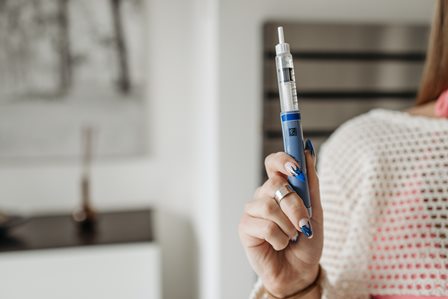
It is important to learn the different methods of taking insulin and which types of insulin can be delivered through each method. There are several ways to take insulin—syringe, pen, pump, or inhalation—although injection with a syringe is currently the most common for people with type 2 diabetes. There are many apps that can help you calculate insulin doses.
Insulin pens are considered easier and more convenient to use than a vial and syringe. Different brands and models of insulin pens are available. Smart pens are becoming more common and can help people manage insulin dosing and tracking. They connect to your smartphone and help you remember when you took your last dose, how much insulin you took, and when to take the next one.
Insulin pumps are attached to your body and can be programmed to deliver rapid-acting insulin throughout the day to cover both basal and prandial insulin needs. When you need to take insulin for meals or correct a high glucose level, calculators within the pump can help determine the exact dose after they are programmed using your personal insulin pump settings.
Inhaled insulin is an ultra-rapid-acting insulin and can replace insulin used for meals and high glucose corrections. It is taken through an inhaler and works similarly to injected prandial insulin. People with diabetes who do not want to inject prandial insulin can use it, but it is not for people who use only basal insulin. The only approved inhaled insulin currently on the market is Afrezza, an ultra-rapid-acting insulin.
Your insulin regimen should be tailored to your needs and lifestyle. Adjusting your basal insulin dose and timing will require discussions and frequent check-ins with your healthcare team. When you start insulin therapy, you may be advised to begin with a low dose and increase it in small amounts once or twice a week, based on fasting glucose levels. People with diabetes should aim to spend as much time as possible with glucose levels between 4–10 mmol/L. Insulin can be used alone or in combination with oral glucose-lowering medications such as metformin, SGLT-2 inhibitors, or GLP-1 agonists.
One of the most important things to consider is the characteristics of the different types of insulin. To learn more, read the article “Introducing the Many Types of Insulin – Is There a Better Option for You?” and talk to your healthcare team.
To dose insulin for meals or snacks, you need to consider several factors. Your healthcare team should help you determine what you need to take into account when calculating your insulin dose. Prandial insulin doses are usually adjusted based on:
- Current blood sugar level. Your goal will be your target blood sugar, and you should know your “sensitivity” per unit of insulin in order to avoid or correct high blood sugar.
Insulin sensitivity factor (ISF) or correction factor
This factor shows how much one unit of insulin is expected to lower your blood sugar. For example, if 1 unit of insulin lowers your blood sugar by 1.5 mmol/L, then your insulin sensitivity factor is 1:50. Your ISF may change throughout the day—for example, many people are more insulin resistant in the morning, which requires a stronger correction factor.
Carbohydrate intake
The insulin-to-carb ratio represents how many grams of carbohydrates are covered by one unit of insulin. You should calculate your carbohydrate intake for each meal.
Insulin-to-carb ratio: the number of grams of carbohydrate that one unit of insulin “covers.” For example, an insulin-to-carb ratio of 1:10 means that one unit of insulin will cover every 10 grams of carbohydrate you eat. For a meal with 30 grams of carbohydrate, a bolus calculator will recommend three units of insulin.
Physical activity
Adjust insulin doses before, and possibly after, exercise—learn more here about managing glucose levels during exercise. Physical activity most often lowers blood sugar, but not always.
Learning to adjust your own insulin doses can be exhausting at first, especially given the many factors that affect glucose levels. Identifying glucose patterns throughout the day can help you optimize insulin timing and dosing. Your healthcare provider, or even an insulin pump trainer (if you use a pump), can guide you through this process. Do not adjust insulin doses without first talking to your healthcare team.
If are interested, read our article From Fearing Carbs to Consuming a Kilo of Sugar in One Race.

What else should I know about taking insulin?
It is common to feel minimal discomfort from needle injections or to notice skin changes at the insulin injection site. You may also experience side effects of insulin therapy, which can include weight gain and hypoglycemia. In some people, insulin increases appetite and stops the loss of glucose (and calories) in the urine, which can lead to weight gain. Hypoglycemia can occur if you do not take the right amount of insulin to cover carbohydrate intake, overcorrect high glucose levels, exercise, or consume alcohol. Treating hypoglycemia also adds more calories to your daily intake and can further contribute to weight gain. Contact your healthcare provider to adjust your insulin dose if you have hypoglycemia, or call emergency services if you experience more serious side effects such as severely low blood sugar, allergic reactions, swelling, or shortness of breath.
Staying in touch with your healthcare team is the best way to transition to insulin therapy. Although the first few days or weeks may be challenging, with the right support you will find a diabetes care plan that works for you.
Source: https://diatribe.org