I go to the mountains fairly often, I have type 1 diabetes, and I’m in quite good physical shape. Still, at the end of May my son Domen surprised me when he asked if we could go to Mont Blanc together. Domen is 22 years old and at an age where he strongly wants to experience everything possible. He recently completed a skydiving course, and now climbing Mont Blanc seemed like a challenge big enough.
The idea probably wouldn’t have occurred to me on my own. However, ever since I started using a glucose sensor, challenges like this no longer seem particularly dangerous to me. To be honest, even before I had a sensor I wasn’t exactly shy about getting into all kinds of situations, but now I’m older and more cautious, and I feel much better and safer knowing that I’ll be able to control my blood glucose in all conditions.
I don’t wear a pump because I feel it would get in the way—maybe I’m wrong. But I don’t feel the Dexcom sensor at all, nor am I afraid it might come off somewhere; it suits me perfectly.
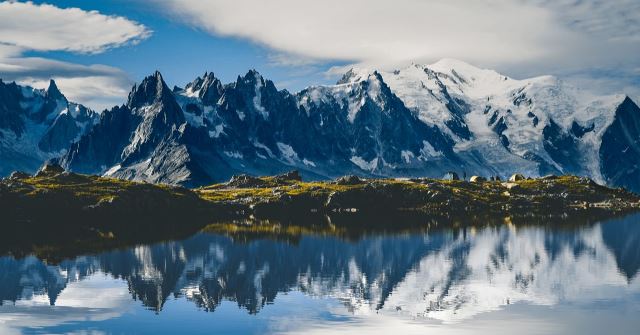
For a trip to Mont Blanc, overnight stays must be booked online. At the time we were searching, the only option with two available beds was July 16 at the Tête Rousse mountain hut 🙂
I was quite surprised by how crowded Europe’s highest mountain is. Now that we’ve booked and paid, there’s no turning back. We’ll need to seriously make sure our legs are strong enough for the climb, but also for acclimatization, because we don’t know how the lack of oxygen will affect us.
Once again, phones and the internet in hand, we booked an acclimatization apartment at Hotel Pokljuka above Bled. We reserved the apartment for three days in order to acclimatize gradually. Before that, we did several intense hikes, as well as testing the Dexcom sensor, which proved to be excellent. We even spent a full day climbing Triglav—the highest peak in Slovenia. We didn’t know exactly how much conditioning was needed for Europe’s highest peak, but we felt ready and full of energy for the challenge ahead 🙂
Nothing Can Surprise Us
When the day for acclimatization arrived, our confidence deflated a bit. So what is acclimatization, actually? The hotel technicians increase the amount of nitrogen in the air, thereby reducing the oxygen level. The body senses this and starts producing more red blood cells so that the cells can receive enough oxygen to function.
On the first day, they set the room altitude to 3,600 m. We felt a bit unwell—breathing was harder, there was a strange feeling in the head, and if you stood up quickly everything would sway—but nothing too dramatic.
On the second day of acclimatization, they set the altitude to 4,100 m. We thought it would be best to stay in the room all day after breakfast and really go through the acclimatization properly. I can freely say that the second day completely wiped us out. We lay in bed with no energy at all. I couldn’t even lift my phone, and typing anything was an impossible mission.
I had a mild headache, but the worst part was feeling like I was 120 years old and hadn’t moved out of bed for 20 years. We were also extremely cold, so I wondered whether I should ask them to turn on the heating. Outside it was 30°C—beautiful summer weather. That feeling of cold was caused by the lack of oxygen, which prevented the body from warming itself properly. I felt so bad and so exhausted that the next morning I started researching COVID symptoms, thinking I might have caught some strange new strain. But once we went outside, within half an hour everything disappeared as if by magic, and we were ready for any possible action.
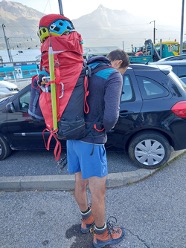
After three days of acclimatization, we drove for eight easy hours in our car to Chamonix, or more precisely to Saint-Gervais–La Fayet, where we spent the night. Both of us carried backpacks with enough clothing, water, food, and sleeping bags. You have to pack not too much so you can carry it all, but at the same time everything you might need.
A Train Journey. The Spruce Trees Are Still Here
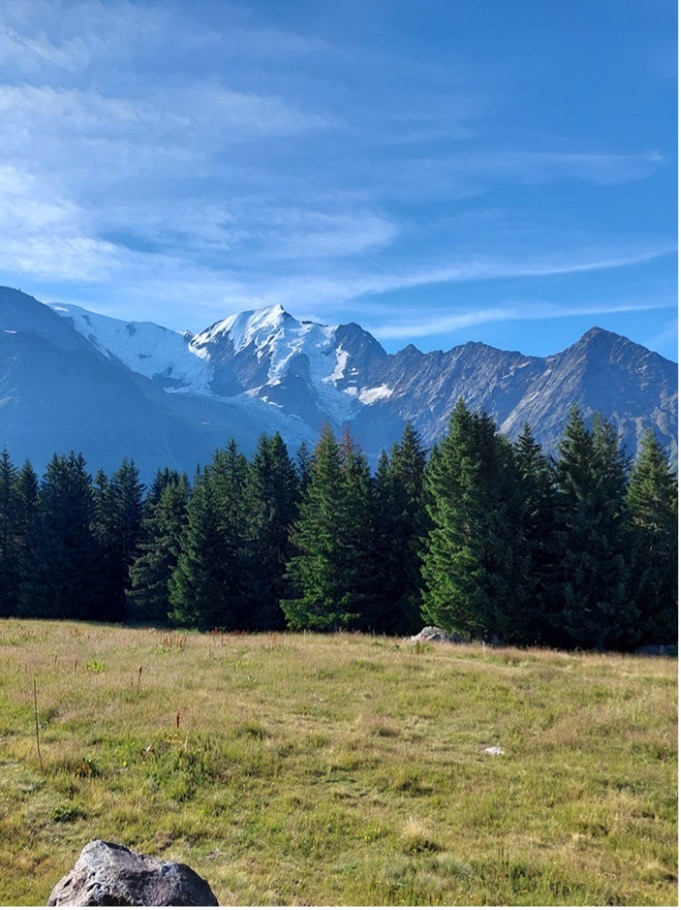
In the morning we had to hurry at a brisk pace to the train station, which took us up to 2,380 m, where our ascent toward Mont Blanc begins. A beautiful route. Since we started at 584 m, we could observe with the naked eye the change in nature and temperature—from summer to winter.
Tunnels in the rock
End of the first part
Author: Boštjan Šnuderl