You can read the beginning of Boštjan’s adventure in the first part, then get ready for the adrenaline-filled sequel The Corridor of Death, and here we are at the end of the trilogy 🙂
The next morning we get up at 1:30 a.m., have breakfast, and by 2:30 a.m. we are ready. From here on, the entire route is covered in snow. A glacier with crevasses requires appropriate equipment: crampons, an ice axe, a climbing harness and rope, as well as auxiliary ropes and carabiners in case of difficulties. During the night we follow the lights ahead of us and do not leave the path, not even when stopping for physiological needs.
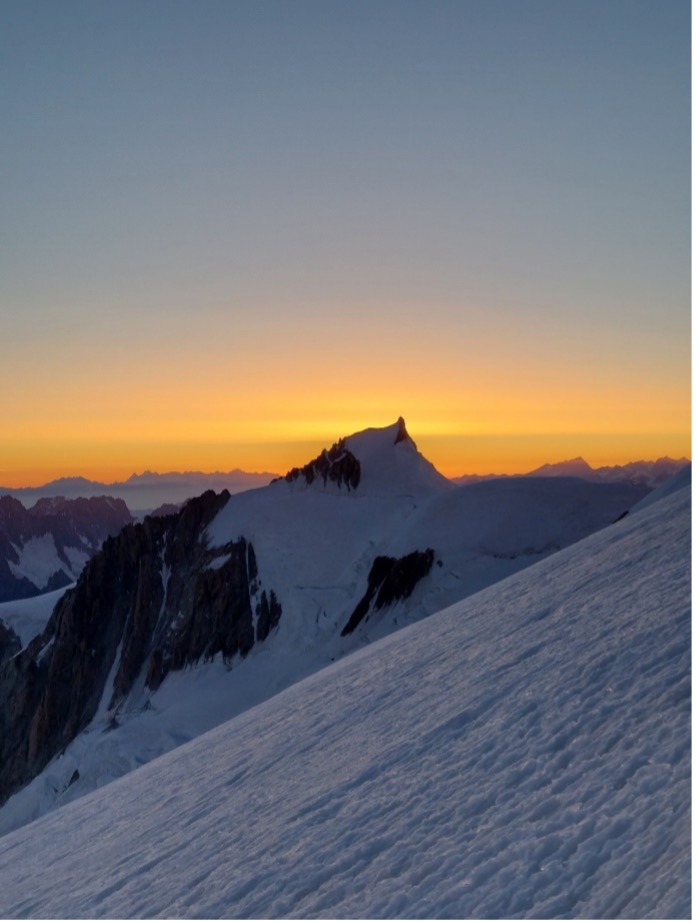
Dawn is breaking
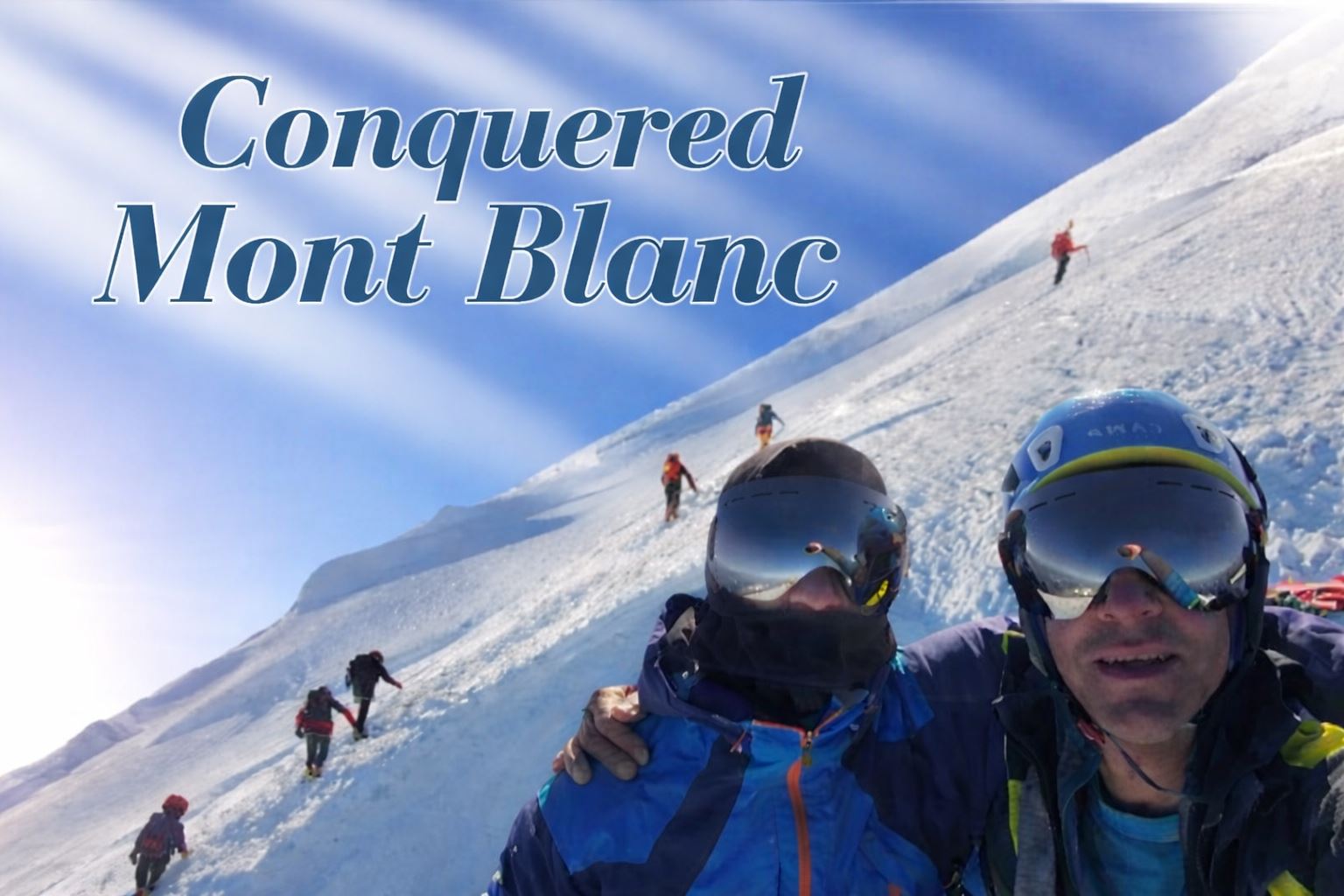
Step by step, step by step, and finally—we made it! We reached the summit of Mont Blanc at an altitude of 4,800 meters! We were extremely satisfied and overjoyed, especially me 🙂
In conversation with local mountaineers, we learned that we had excellent conditions because it was very warm. Normally, they say, the wind at the summit is so strong that you don’t even want to open your mouth.
Of course, reaching the summit is not the end. A long descent awaits us. We have 2,500 meters of altitude to descend and, of course, the Corridor of Death again from the previous part. At first, adrenaline carries you because of the success, but after some time you inevitably start to feel just how tired your legs really are.
When we reached the Corridor, we crossed it again using our tactic and made it to the so-called safe zone. There we met a Frenchman who had been waiting there alone for 40 minutes because he was afraid to cross. We were talking to him when suddenly we heard rocks rolling. We looked above us and saw a rock the size of a washing machine rushing toward us. But that’s another story…
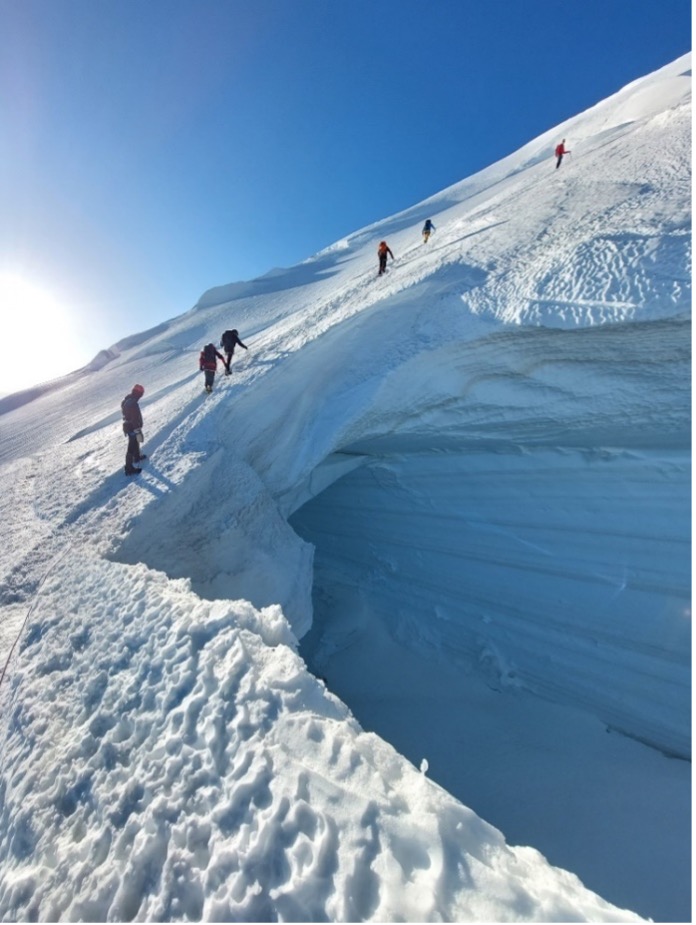
To illustrate the conditions in the Corridor of Death, it is said that the mayor proposed that starting next month, every person attempting the climb would be required to pay a deposit of €15,000. Of that amount, €10,000 would be used in case of rescue, and €5,000 in case of death. In the end, that decision was not confirmed; instead, they decided to close all huts on the Gouter route due to the danger.
My goal before starting any strenuous physical activity is to have my glucose around 8 mmol/L. No sane person wants to experience severe hypoglycemia during such an adventure. During exertion, the body directs all blood and glucose to the muscles, and consumption is quite high. And if blood sugar drops low, it is very difficult for me to raise it unless I stop for at least 15 minutes. Eating glucose and simply continuing the activity is not enough.

So, I start at around 8 mmol/L and continuously monitor my glucose, roughly every 10 minutes. When it starts to drop, I immediately eat something sweet or drink a sweet juice—about 200 ml, not less. This way I maintain a sufficiently good level, between 5 and 8 mmol/L. I try not to let it drop below 4.5 mmol/L, precisely because then I have to stop, which is sometimes inconvenient.
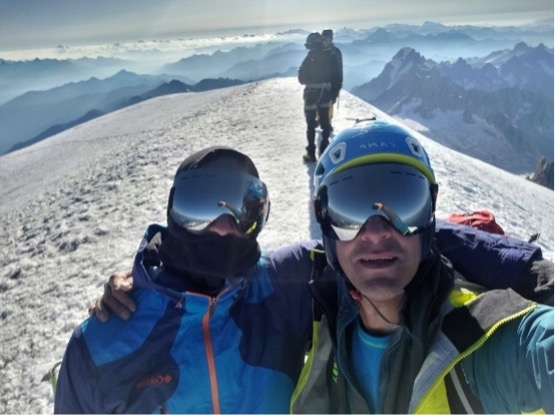
Mont Blanc 4,810 m
For an adventure like this, lasting 4, 5, or even 10 hours continuously, I need about 2 liters of sweet juice and 5 to 10 energy bars.
Everyone knows their own body best, so for some people it may be different during intense physical activity. That’s why the most important thing is to find your own formula that works and to be confident in advance that it’s possible. 🙂
Author: Boštjan Šnuderl