Find the first part of the Mont Blanc travelogue here.
After getting off the train, we walked the first part of the route through what is known as the “desert.” The landscape looks as if someone spilled stones everywhere, and the heat in this section is brutal.
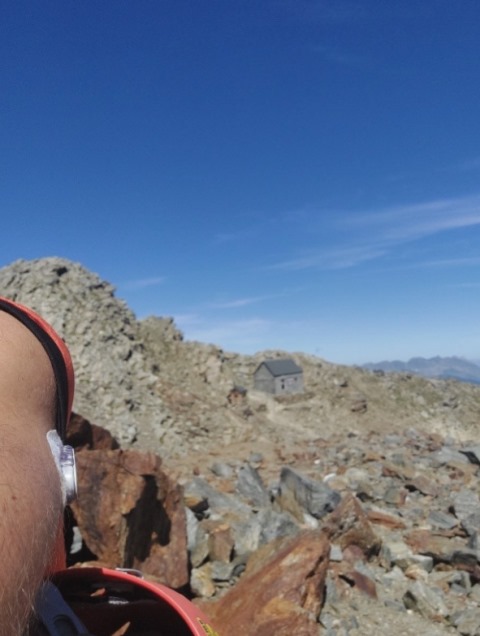
The Dexcom sensor looks like it has had enough of everything, but it is still very accurate and firmly attached.
We continued past a mountain hut toward the Tête Rousse shelter. By then we were already at an altitude of 3,167 m, without any problems. Luckily, our reservation at Tête Rousse was waiting for us. But there is no relaxing — we immediately have to get used to the house rules. Tête Rousse does not allow entry into the hut wearing mountaineering boots. At the entrance there is a basket with Crocs, and you must change footwear and leave your backpack. The hut is not what you would expect on such a route — it is beautiful, with large windows, and you can see the glacier stretching out in front of you.
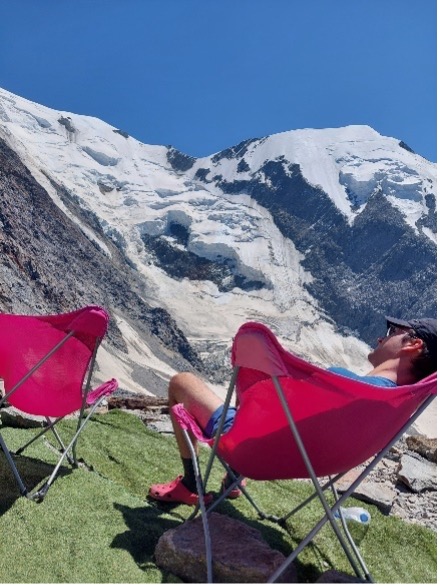
We got the idea to walk another section of the route to the next hut. It would be much easier for us to start the next day at 3,835 m instead of 3,167 m. We rest, and the hut keeper really does inform us that there is sleeping space available at the Gouter hut at 3,835 m and that they are expecting us.
Local authorities pay attention to every small detail here. As we approached the Tête Rousse hut, we reached a point where everyone arriving is asked whether they have a reservation, which is then checked. If someone does not have one, they are immediately sent back down to the valley.
The penalty for camping anywhere around the mountain is at least €300,000 and two years in prison. Police helicopters patrol the mountain constantly. So let’s see who is stronger.
The Corridor of Death
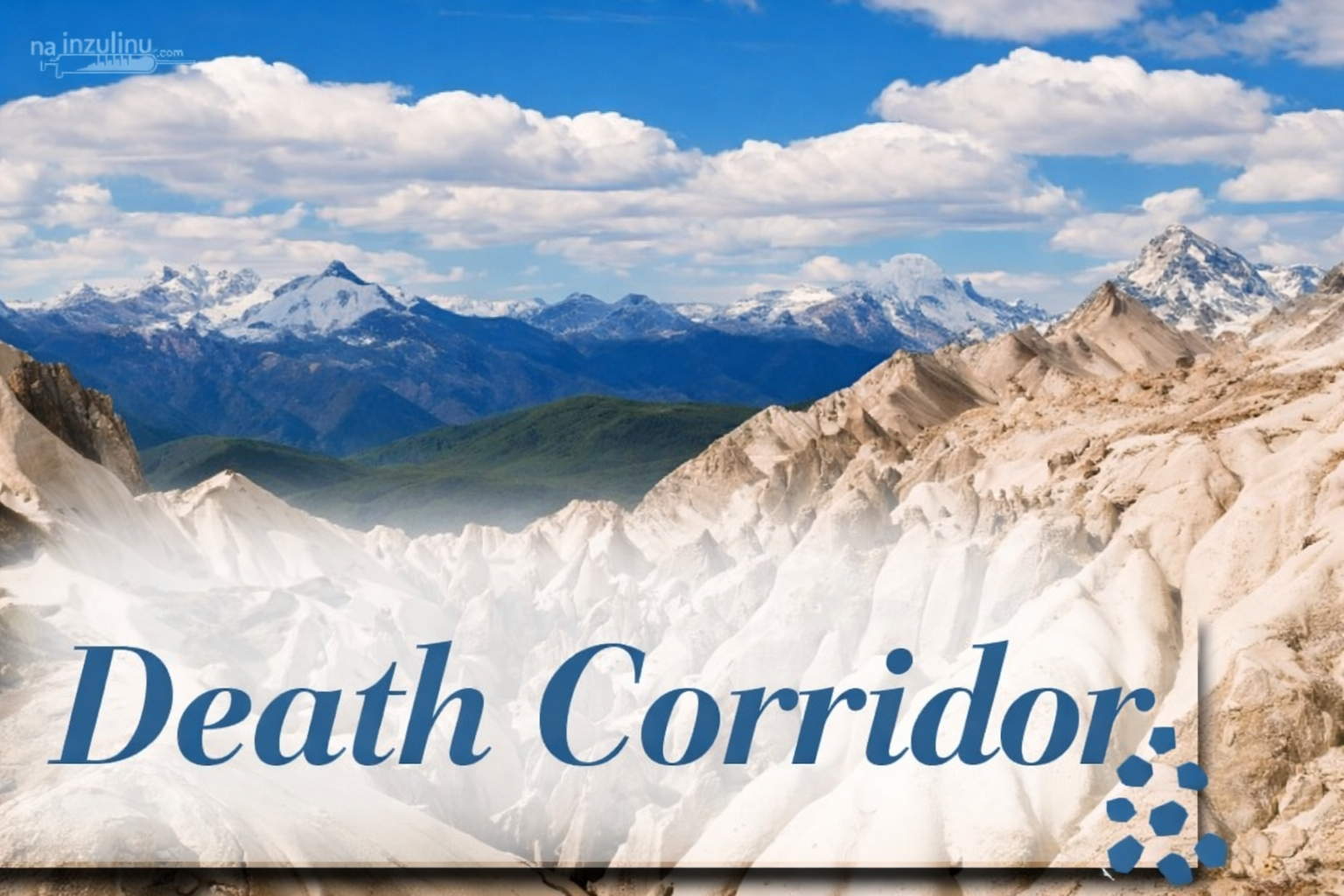
Now our route from Tête Rousse to the Gouter hut begins. About three hours of ascent on tricky terrain await us. Right at the start we have to cross the Gouter Couloir, the so-called Corridor of Death. This is the area where the most people die. Rocks fall from above because the glacier is melting, so extreme caution is required.
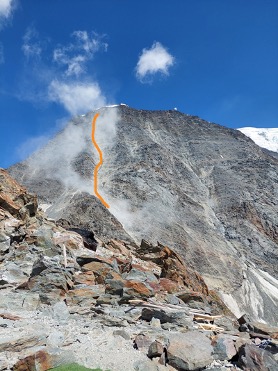
Gouter Couloir. What looks grey is not clouds, but dust from rocks that are constantly falling.
We came up with a 1+10 tactic that proved to be excellent. It works like this: we wait until nothing falls for one full minute. That would mean the rockfall has calmed down. Then we extend the waiting time by another 10 seconds to make sure we haven’t missed anything. If we don’t hear any rumbling, we sprint at maximum strength and speed to the other side, which is about 60 m away. The Dexcom alarms went off, but the brief rise in blood sugar actually helped. Adrenaline raises blood sugar, but it also provides enormous energy, making it easier to run across the dangerous distance. Those 10 seconds actually serve only to calm the brain and make it think everything is under control — although of course it isn’t. One way or another, we successfully crossed the Corridor!
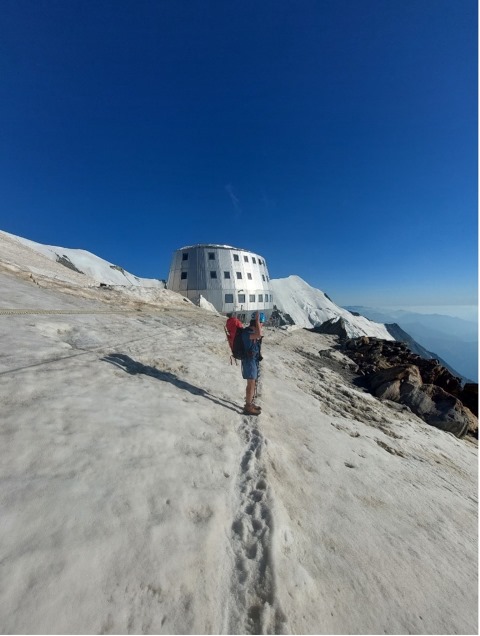
Gouter hut – Corridor of Death
Interestingly, the Corridor is visible along the entire route to the Gouter hut, as if in the palm of your hand, so you can easily follow how people either give up on crossing or improvise as best they can.
This year there is so much rockfall that all agencies and all mountain guides canceled their clients, and no one wanted to take people onto the mountain because the risk was too high. Giving up was not an attractive option for us, even though we were far from feeling at ease.
In the evening we reached the Gouter hut, had dinner, and went straight to sleep because we are setting off very early tomorrow.
End of part two
Author: Boštjan Šnuderl