TIR – time in range
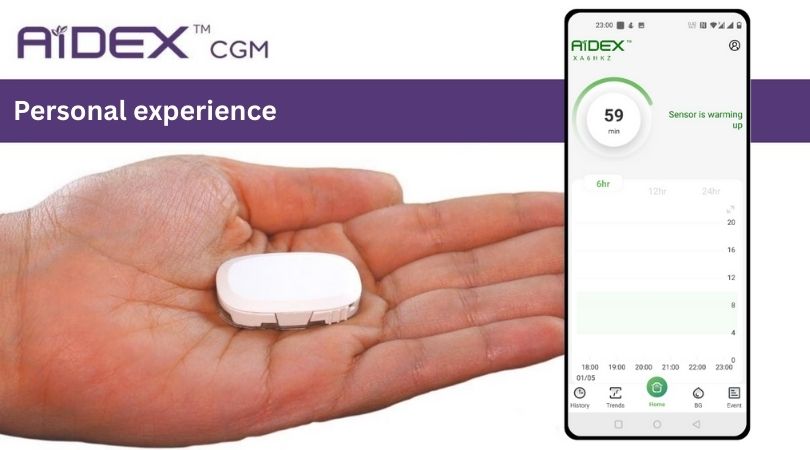
TIR measures the percentage of time during the day when glucose levels are within the target range. Current guidelines define this range as between 3.9 mmol/L and 10.0 mmol/L. TIR tracks real-time changes in glucose levels and provides detailed insight into glycemic dynamics throughout the day.
TIR is a dynamic indicator that accounts for glucose fluctuations over time, changing every five minutes depending on the current glucose trend.
HbA1c – glycated hemoglobin
HbA1c reflects the average blood glucose level over the past three months. It is used as the standard indicator of long-term glycemic control. HbA1c provides insight into average glucose levels over a longer period but does not reveal daily glycemic fluctuations.
Irl Hirsch, MD, has spoken about continuous glucose monitoring (CGM) devices and their accuracy, and compared HbA1c levels with average glucose. When HbA1c is 5, the average glucose is 5.5 mg/dL. CGM devices have taught us a great deal about HbA1c.
Sensors have taught us about HbA1c and shown that we may under-treat or over-treat patients. Using TIR and HbA1c together may be most important for predicting diabetes complications. Therefore, both are needed for good regulation and prediction.
Professor of Epidemiology and Medicine Elizabeth Selvin defended the use of HbA1c at a conference. In 2024, she considers that HbA1c should still be a diagnostic criterion for diabetes. She argues that HbA1c is a standard measure for monitoring glycemia in people with diabetes and is essential for guiding therapy. HbA1c is also a screening and diagnostic test for prediabetes and diabetes and is used as an endpoint in clinical trials of glucose-lowering therapies for type 1 and type 2 diabetes.

The advantages of HbA1c in diabetes management include lower biological variability, more precise glycemic monitoring, standardized measurement, no requirement for fasting when sampling, and less influence of acute factors on results. HbA1c is also a standard tool for therapy management and adjustment and is strongly associated with long-term macrovascular and microvascular outcomes.
Measuring HbA1c and fasting glucose at the same time provides reliable confirmation for the diagnosis of diabetes, i.e., HbA1c ≥ 6.5% and fasting glucose ≥ 7 mmol/L in a single blood sample.
Comparison of TIR and HbA1c
TIR and HbA1c are complementary indicators that together provide a holistic view of glycemic control in people with diabetes. TIR offers more detailed insight into short-term glycemic control and daily glucose fluctuations, while HbA1c provides information on long-term glycemic stability. Changes in TIR can be detected more quickly compared to changes in HbA1c, which reflects average glycemia over a longer period.
The conclusion is that TIR (time in range) and HbA1c are two different but complementary indicators of diabetes control and together provide new insights into the management of diabetes.
Author: Laura Crvenka