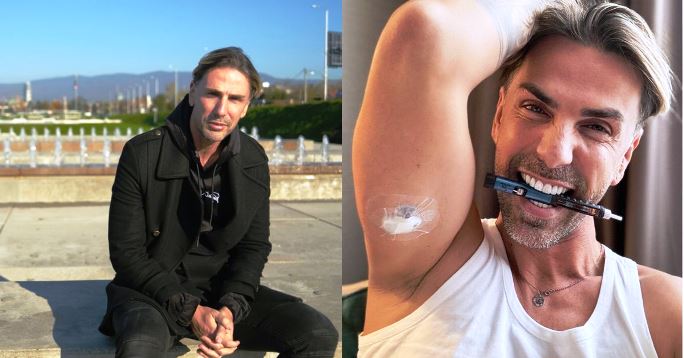
Allow me to introduce myself. My name is Nebojsa Nikolic, I am 47 years old and I am from Croatia.
When I was diagnosed with type 1 diabetes in May 2018 at the age of 41, I had no idea that endurance training would later become a central part of my life — and for the better.
Accepting the Diagnosis and Learning the Basics
I diligently accepted the “rules of the game” and began studying the three key areas for good glucose management: therapy, nutrition, and physical activity.
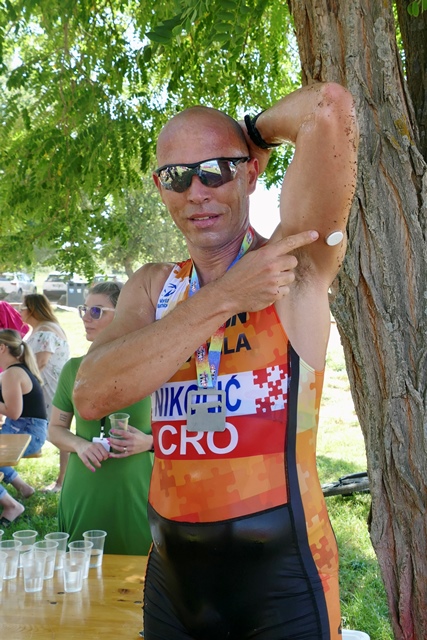
At first, I threw myself into reading literature and online sources about the disease itself. I had to get to know the “enemy.”
Experimenting With Nutrition and Overcoming Fear
At the same time, I “played” with food, testing ingredients and various eating styles while listening to and learning about my own body. During that first year, I feared carbohydrates — I weighed them, counted them, measured them, calculated them, and I was doing well. However, the fear of hypoglycemia held me back from taking a step forward, preventing recreational physical activity from becoming part of my daily life, even though I had always been active in sports until diabetes abruptly interrupted that.
For half a year I mostly abstained from sports, and then, by coincidence, at the end of 2018, a swimming pool opened in Pula. This gave me a chance to step out of the comfort zone into which diabetes had pushed me. My son was then training triathlon at Triathlon Club Pula, and that’s how I learned that there was a group for parents — adults who trained at the same time as the children. I joined them. I started only with swimming, and later added running. In the meantime, my son moved on to other sports, but I remained at the pool and running to this very day.
Training Without CGM
At that time, there was no CGM yet, so every training session was a kind of lottery regarding glucose control, but I always followed — and still follow — the rule that during training I must always have some form of sugar at hand to avoid dangerous hypoglycemia. Any excess glucose didn’t scare me because it is quickly burned during activity. When CGM arrived — specifically the Libre sensor, which was approved for me in September 2020 — things radically improved. Control became better and easier, and the insight into data allowed me, through numerous training sessions, to understand my body even better and have ready-made routines for all scenarios. This encouraged me a lot, and I gradually increased my training duration, especially running, and began entering recreational races, from short 5 km road races to 10 km races. Trail runs followed — from 15 up to 40 kilometres.
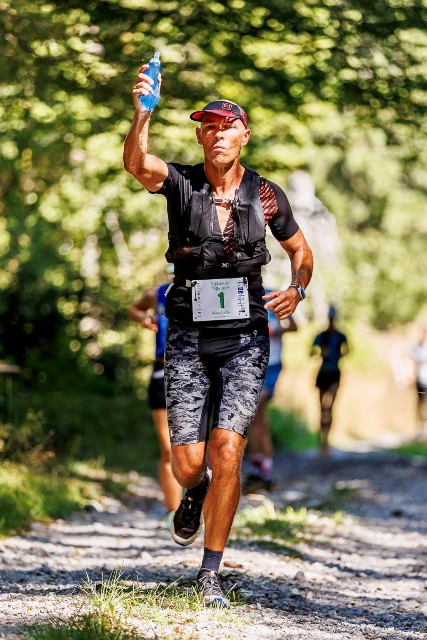
Two years ago, I got injured and wasn’t allowed to run for 6 months. So, although I had never ridden a road bike before, I replaced running with cycling. I really liked road cycling. And that’s how the idea of triathlon was born.
Entering the World of Triathlon
For those who don’t know, triathlon is an endurance sport consisting of three disciplines: swimming, cycling, and running — in that order. Distances range from the shortest sprint triathlons to long triathlons, also known as Ironman, according to the globally known brand that organizes such races.
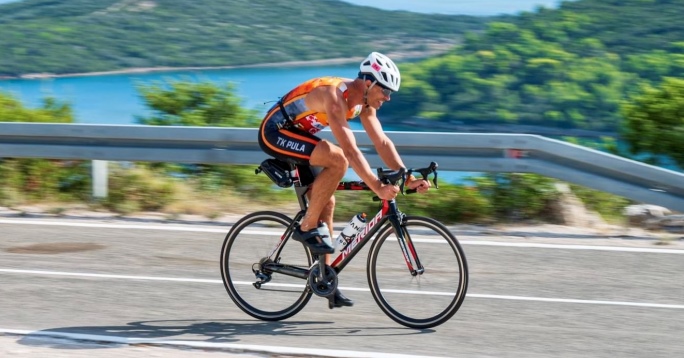
Last year, 2023, I completed my first triathlon races, and 2024 was a true competitive year for me, as I completed several races of various distances up to the so-called Half Ironman, which consists of 1.9 km swimming, 90 km cycling, and 21.1 km running (half marathon distance).
During these 6 years of living with diabetes, I have learned to listen to my body and gradually understand it to the point where I dare to take on difficult physical challenges that require a great deal of energy. And energy largely comes from carbohydrates — some of which are stored as glycogen in our muscles, while others must be consumed during activity in various forms such as isotonic drinks, energy bars, energy gels, and similar products. These are usually items that people with diabetes tend to avoid, but in endurance sports everything changes completely — performing such activities is unimaginable and impossible without consuming large amounts of carbohydrates.
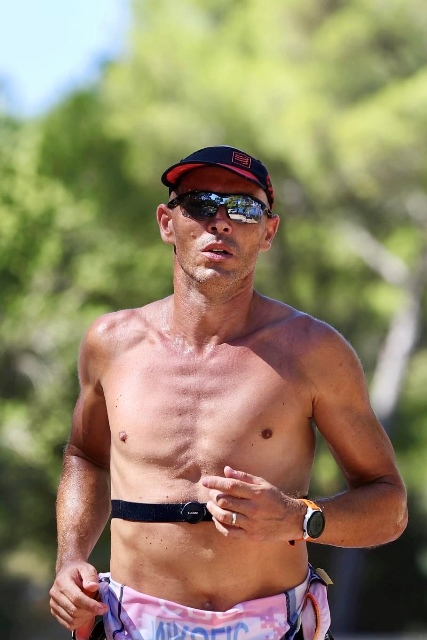
I would like to mention that during activity I use a Garmin watch with the CGM Connect app (which is free), and the watch is connected via smartphone and the LibreLinkUp app to the Libre 2 sensor, so I always have insight into my glucose levels, which helps me tremendously and — above all — gives a sense of safety. After activity, I have access to all statistics, which allows me to prepare even better for the next session.
Race Nutrition Strategy — Real Example
Here is what this looks like in practice: at a middle-distance triathlon in September this year, which lasted more than 6 hours, the Garmin algorithm estimated my total energy expenditure at around 6200 kcal.
Before and during the race, I consumed:
100 g of carbs (oatmeal),
5 energy gels with 45 g of carbs each,
about 5 liters of isotonic drink — 90 g of carbs per liter ,
about a liter of Coca-Cola (regular, not Zero),
and some snacks (bananas, oranges, energy bars…).
Altogether, approximately 1000 grams — one kilogram — of sugar, which equals about 4000 kcal, all on regular basal insulin, without corrections. The remaining calories my body supplied from glycogen and fat stores.
During the race, my glucose ranged from a satisfying 9 at the beginning to 3.5 at the end. To make up the difference after the race, I ate a lot (fish, polenta, pasta, cookies…), honestly, I didn’t count — I just followed the sensor. I drank a lot (Coca-Cola, beer, and of course water, which doesn’t count), all without insulin, and I spent the entire next day without fast-acting insulin as well. And I predicted and planned all of this in advance thanks to knowing my body and metabolism, and to the Libre 2 sensor connected to my watch.
From my own experience, I can say that as people with diabetes, we must not limit ourselves. We must approach our condition responsibly, but we should not be afraid. I want to show that with diabetes it is possible to achieve far more than what fits into everyday life. Of course, I will be glad if I motivate someone along the way to pursue their goals — whatever they may be. I personally still have many, and I no longer consider diabetes an obstacle on that path.
Author: Nebojsa Nikolic