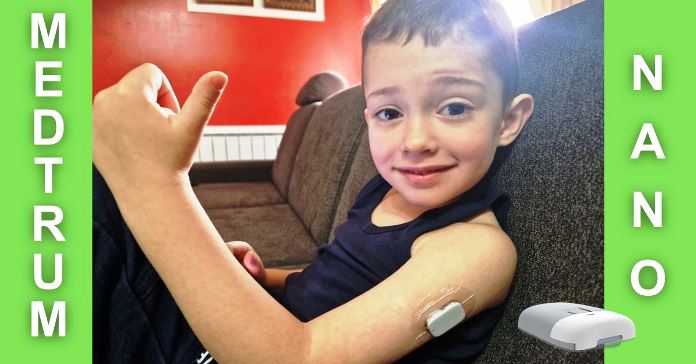
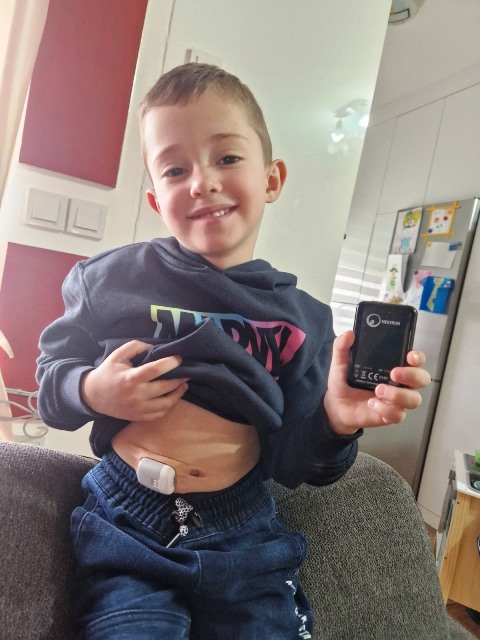
My name is Tomislav Oršolić. I am the father of a five-year-old boy, Grgur, who has been using the NANO tubeless insulin pump for the past few months—one of the new additions to the supplementary HZZO list of medical devices.
After three years, we are sleeping again!
After three years, we are finally sleeping. The nights are phenomenal. Although there is still room for learning and getting fully accustomed to the pump, it has been a perfect choice for us. Grgur is finally more relaxed with food, much freer at kindergarten, the possibility of insulin dosing errors has been significantly reduced, and the small size of the pump works in everyone’s favor… in short: we have nothing but praise for this pump, which has greatly облегчed our daily life! As key advantages, I would highlight basal and bolus suspension when hypoglycemia is predicted, as well as the pump’s dimensions and the fact that it has no catheter.
Until now, we had only used insulin pens, so I did not expect that a pump would bring so much ease into our lives and provide relief in delicate problems that constantly arise at Grgur’s age.
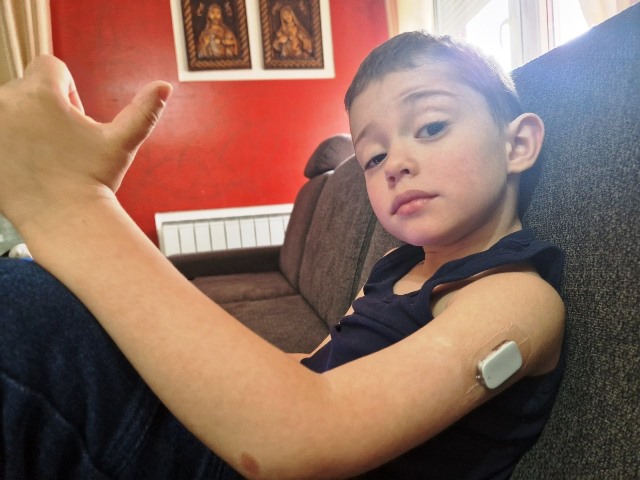
An excellent choice for every child
Grgur is unpredictable with food, which is why we give insulin after meals. Another very important aspect is the ability to deliver very small insulin doses, which in my opinion are ideal for young children.
Experience has shown me that 0.5 IU on a pen is a very rough measure, especially given Grgur’s young age. While we were using pens, our worst blood glucose values were between 10 and 12 mmol/L. If we gave him 0.5 IU of insulin, he would go into hypoglycemia, and that caused major problems. Now we can give corrections in the range of 0.1 to 0.5 IU. This is a lifesaver for everyone.
We enrolled Grgur in sports training
This pump has a reduced basal percentage function. We reduce his basal to 50% for one hour, and the training session goes excellently. We also really like the Combo Bolus option, which we use when Grgur eats fatty food and delayed insulin delivery is required. When he eats something fatty, for example, we give him 2 IU of insulin and split it into percentages: 50% immediately, and the remaining 50% the pump delivers automatically over a set period (1 to 2 hours). We are talking about 1 unit of insulin delivered over an hour—for a small child, this is invaluable.
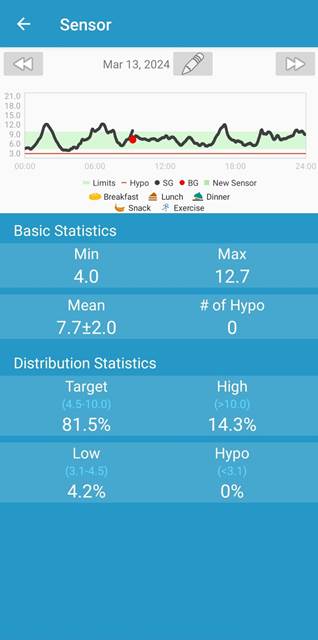
If you miscalculate carbohydrates, the pump smooths glucose levels on its own—ideal for kindergarten!
The pump automatically corrects hyperglycemia, which is perfect for kindergarten, especially when we miscalculate carbohydrates. I tested how the Auto Mode option works by deliberately entering fewer carbohydrates than Grgur actually ate at kindergarten. Indeed, his blood glucose did not rise above 11–12 mmol/L. In Auto Mode, smaller amounts of carbohydrates are not entered.
It is a huge relief that we do not have to enter carbohydrate amounts up to a maximum of 7 g at all—the pump handles it automatically. This is excellent for children, because an occasional candy or a bit of chips can be covered easily. Since he is in kindergarten, eats as he eats, and meal reporting often turns into a “broken telephone” game—for example, Grgur has lunch and the teacher tells us he ate a ladle of soup and a ladle of rice (whose weight we obviously guess)—yet everything still turns out great!

For safety and to avoid hypoglycemia, we often “intentionally” enter fewer carbohydrates, and the pump corrects if glucose goes high. Overall, our life has turned into a fairy tale! Before, when we were using pens, glucose fluctuations during full-day kindergarten attendance were worrying—from hypo to hyper. We managed everything, but it was quite stressful.
We have only recently unlocked Auto Meal Handling and are still trying to understand how it works. Using this function allows you to announce the type of meal without entering the carbohydrates consumed. It is a great option, but in our case, due to Grgur’s age and dietary unpredictability, it will probably have to wait a bit.
When he is at home, we turn it on, but when he is at kindergarten and we cannot see his meal in real time, we turn the function off because we cannot assess the amount of carbohydrates he will eat.
Diabetologist Igor Marjanac and Bauerfeind’s expert team—knowledgeable and highly supportive!
I would like to express my sincere gratitude to Bauerfeind’s diabetes expert team. Igor Maksimović, a Bauerfeind employee in Osijek who provided our hospital training, is a person with an impressive level of knowledge about diabetes. He is so knowledgeable, understanding, and accommodating that I am still amazed by the positive experience. He is practically available 24/7! That truly impressed us! We cannot praise him enough! Although he provided us with training, the pump is genuinely complex for beginners, with a lot of information to absorb… That is why his knowledge, patience, and approachability were crucial. I believe that without him, we would not have managed to learn so much.
We were also greatly helped by Dr. Igor Marjanac, who works in pediatric endocrinology at KBC Osijek. He is available for advice at any time, very accommodating, decisive, and willing to listen before drawing conclusions. We have only words of praise for him as well.
Drawbacks are negligible, but a few are worth mentioning:
We are satisfied with the sensors, although some do not last the full 14 days. As mentioned, this is a negligible issue for us, since when a sensor is faulty, we are entitled to a warranty replacement. As for the patch pump itself, we have absolutely no complaints—it works flawlessly.
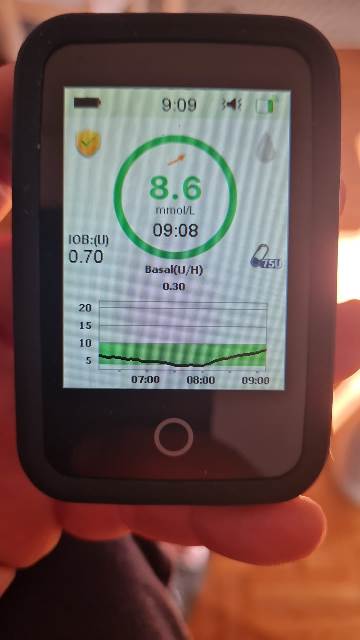
We are also satisfied with the PDM device, although a single battery charge lasts about three days. It would be better if it lasted longer. Fortunately, new pods are coming that will be optimized, so the PDM should also last longer.
The biggest drawback, which is not related to the pump itself or its technical aspects, is the co-payment for the sets, which amounts to approximately €230 every three months. In my opinion, at least for children, this should be significantly more affordable.
Author: Tomislav Oršolić